
Alguém falou em Pilates Clássico»?
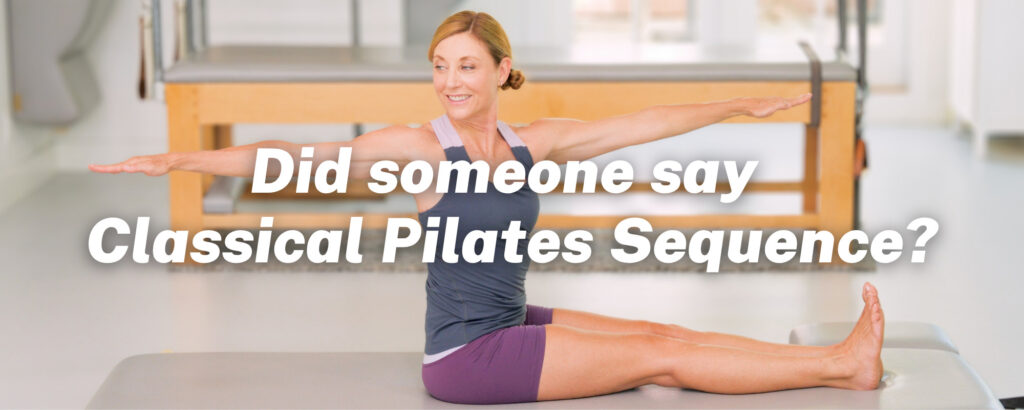
If you’ve been around the Pilates world lately, you’ve probably noticed a renewed interest in the original Classical Pilates sequence from Joseph Pilates. It’s been popping up everywhere, and for good reason.
There’s a reason this method has lasted for decades and continues to resonate with teachers and students alike. At its core, the classical Pilates sequence mirrors human development. It follows a progression that feels intuitive because, in many ways, it’s how your body first learned to move.
It starts at the beginning—literally!
In Pilates you start strengthening your body just like a baby develops support for it’s spine and vital organs, your first class begins on your back working your abdominals against gravity.
This is the foundational work that supports us in everything we do.
Then things start to connect
Once you’ve gained enough support in front, you begin to roll over and learn exercises that strengthen your sides and back body for a corset-like effect that gives your spine and pelvis effortless power, balance and posture.
Your body starts working more as a unit, instead of separate parts doing their own thing.
You earn your way to standing
As the sequence progresses, it prepares your body for standing.
While doing all of the above, Joe’s sequence also builds the critical low body musculature that humans need to walk so you finish class with standing exercises that bring you back to upright.
Why the order matters
There are a lot of ways to teach Pilates now, and plenty of room for creativity. But the original sequence offers something really useful: a clear, thoughtful structure.
The original sequence does so much! It:
- provides a safe and sequential warm up
- adds complexity as you grow in your practice
- treats your body as a whole rather than isolating muscles
- automates neural pathways for great posture
- gives you a framework for tracking growth
- balances your body without overdeveloping any one area
Something to come back to
The classical order is like a home base. It gives you something steady to return to, whether you’re teaching, practicing, or just trying to reconnect with the work in a more meaningful way.
Over time, it becomes less about memorizing exercises and more about understanding how everything fits together. You start to notice the transitions, the relationships between movements, and the way one exercise sets you up for the next.
The more time you spend with it, the more you begin to appreciate just how intentional it all is. The sequence isn’t just a list, it’s a system! One that Joseph Pilates built to support the body as a whole, and one that continues to reveal more the deeper you go.
Click the button below to see downloadable lists of the classical Pilates order for the Mat, the Reformer, all of the equipment Joseph Pilates created!
Etiquetas:

Da Comunidade